Activation Records
约 750 个字 6 张图片 预计阅读时间 8 分钟
参考笔记
本章可对照 HowJul 语雀笔记的 第 6 章:活动记录,以及 Cubic Y³ 的 Part 9: 活动记录。
Important
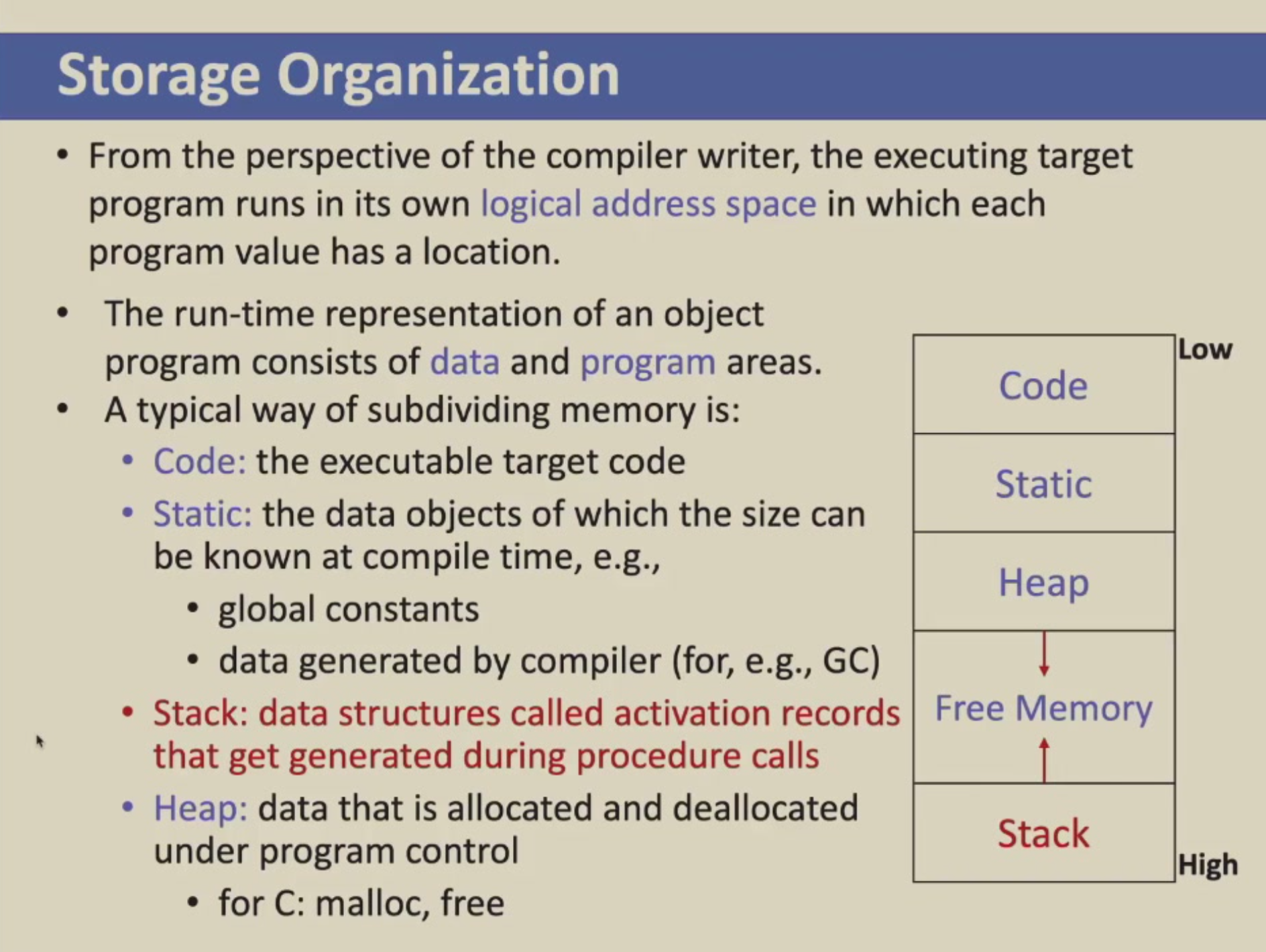
本节课 Activation Records 主要关注的是 Stack 在函数调用时发生的变化
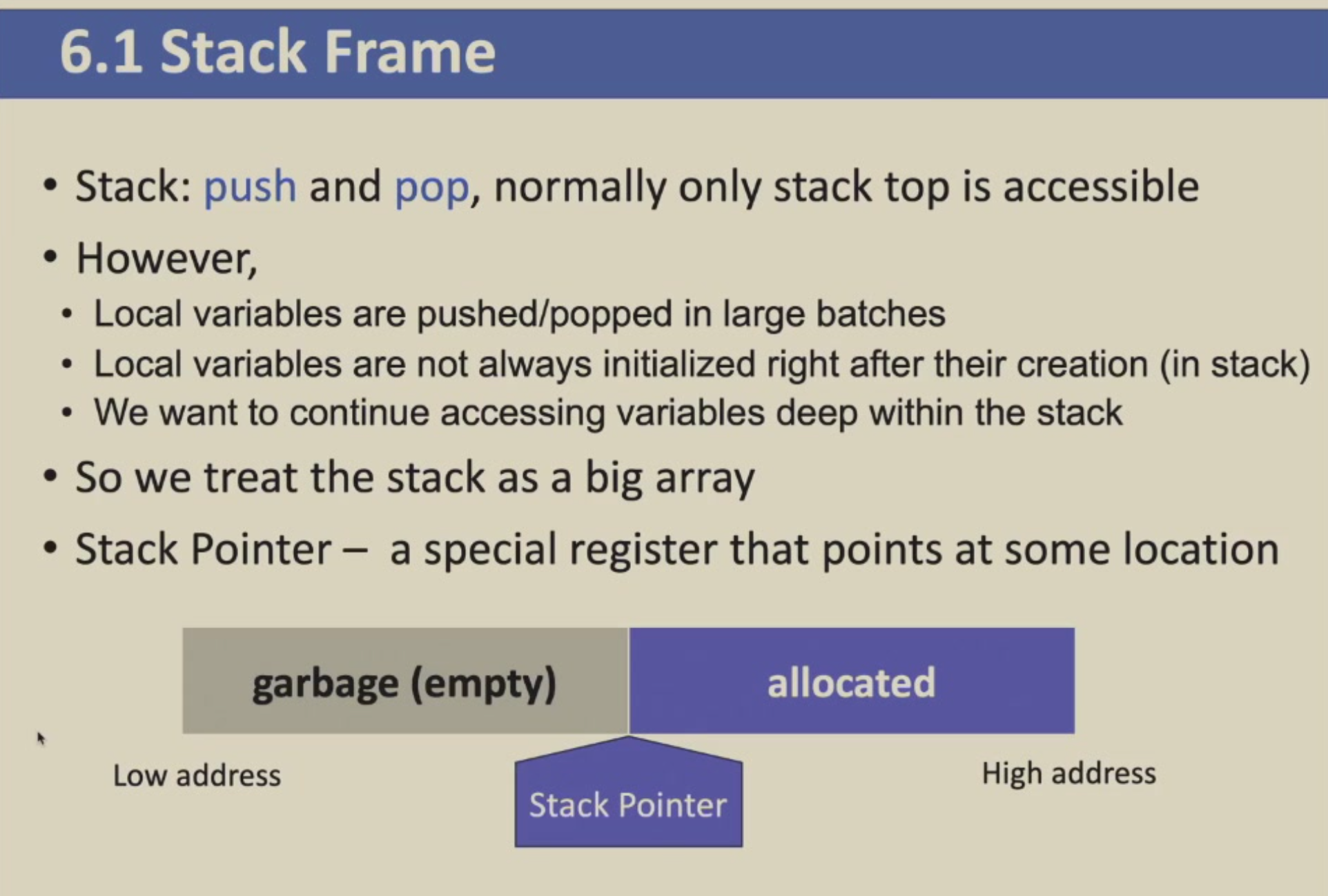
我们使用的 Stack Frame 结构大致如下,比较重要的是 Stack Pointer 这个指针:
Overview
Important
本章内容中最重要的内容,需要牢记并理解这张栈帧图(相当于把上面的栈示意图逆时针旋转了 90 度)
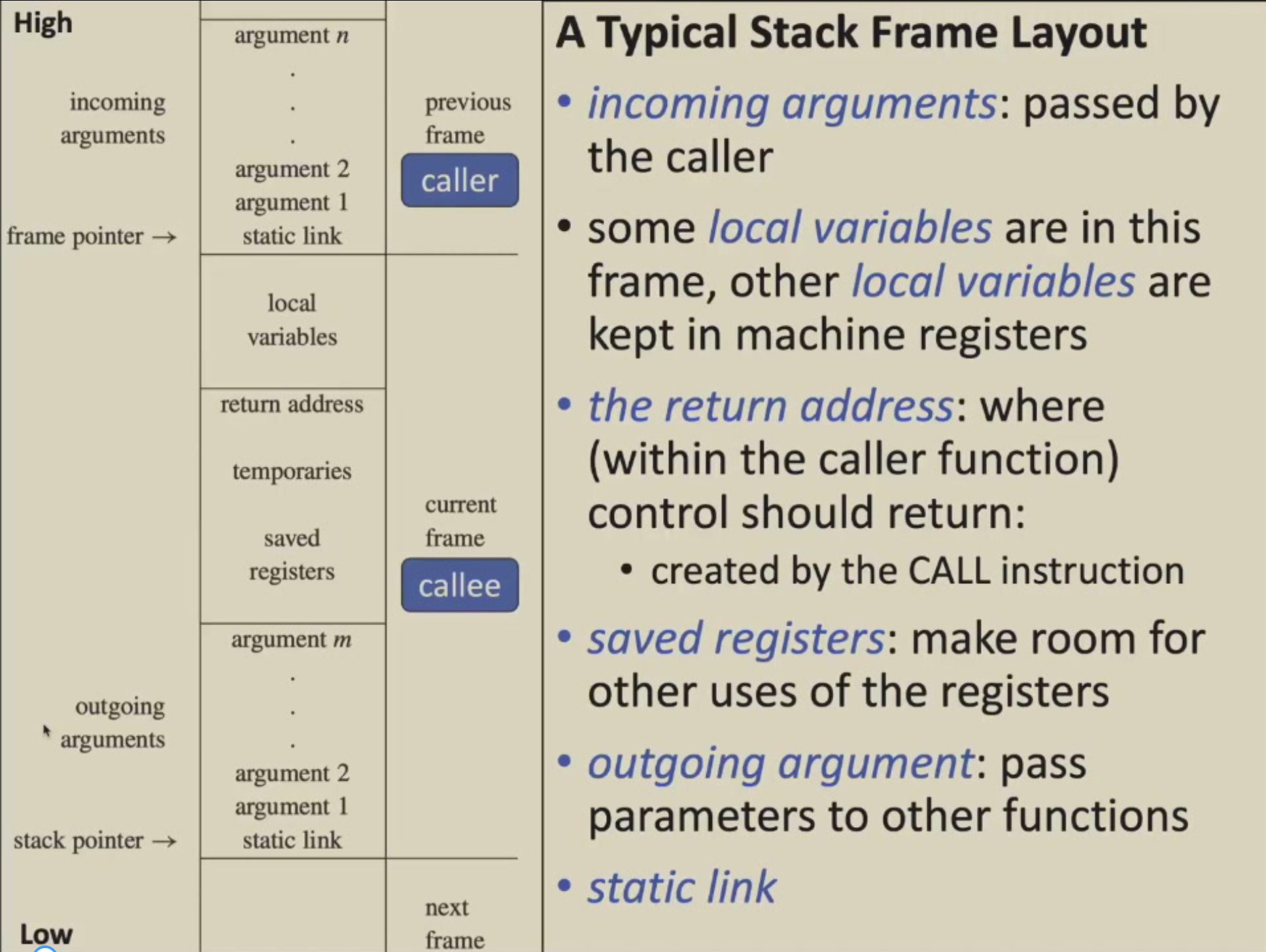
static link 主要是用于在函数体内部声明其他函数时,例如:f call g, g 又是在 h 中声明的一个函数,可以掌握 h 的信息,所以 caller f 的 frame 中会有一个 static link 指向 h 的 frame pointer
接下来的内容会围绕这个 Typical Stack Frame Layout 中的每一部分是如何实现的
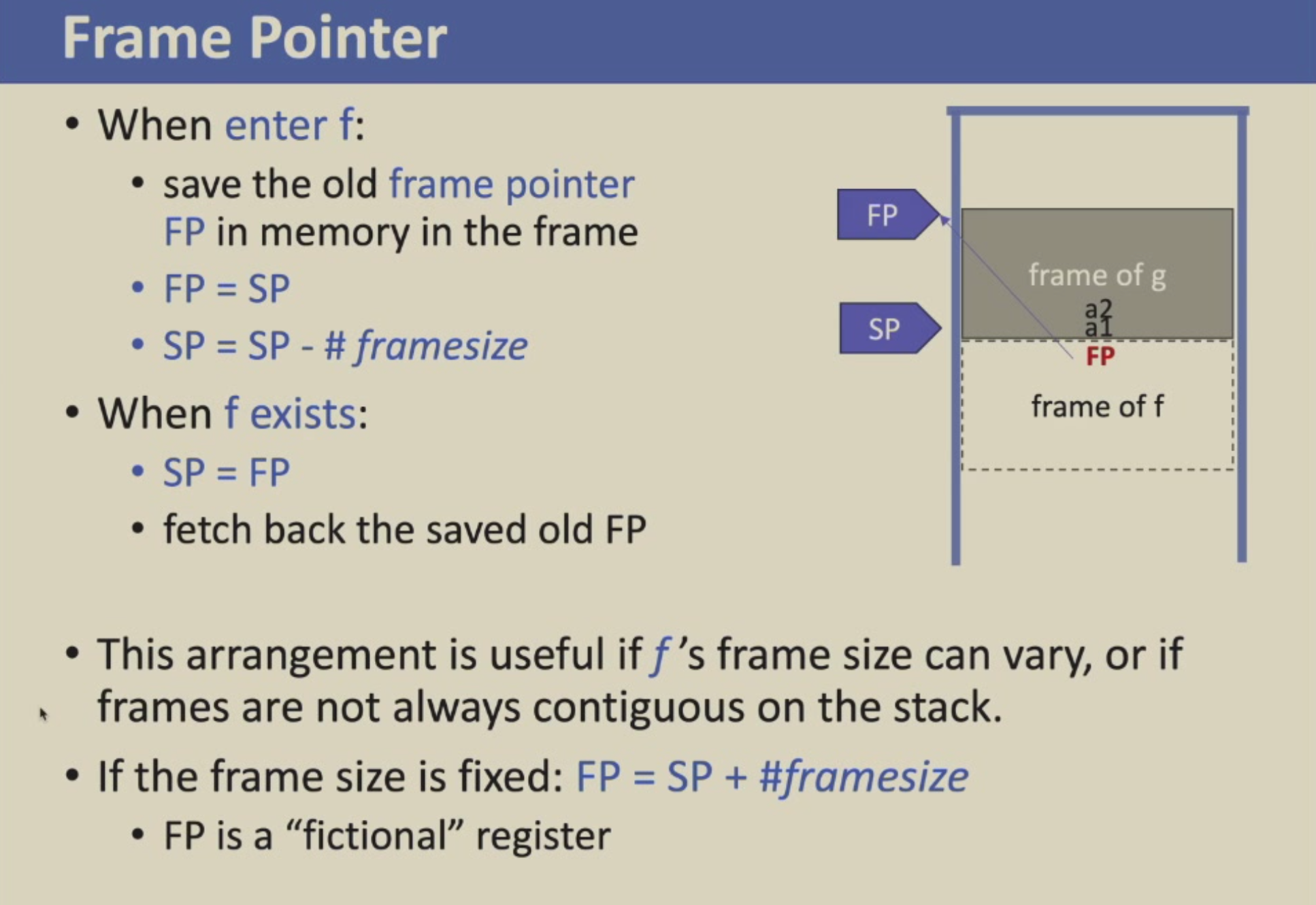
Frame Pointer
- Suppose function
g(...)calls functionf(a1, ..., an)g: callerf: callee
- When
gcallsf:- The stack pointer points to the first argument that g passes to f
- f allocates a frame of size
#framesize
Frame Pointer 和 Stack Pointer 的变化过程如下,比较简单:
Registers
Suppose:
fis using registerrto hold a local variable and calls procedureg.galso usesrfor its own calculationsrmust be saved (stored into a stack frame) beforeguses it and restored (fetched back from the frame) aftergis finished using it.
至于将 r 保存在 f 的栈帧中还是保存在 g 的栈帧中,就需要看不同的架构实现,也就产生了 caller-saved register 和 callee-saved register 两种 register 的保存方式
Parameter Passing
-
It causes needless memory traffic and consumes more time if arguments are all passed only on the stack.
-
Parameter-passing conventions for modern machines specify:
- the first k arguments (for k = 4 or k = 6, typically) of a function are passed in registers, and the rest of the arguments are passed in memory (stack)
- E.g.
f(a1, ..., an)receives parameters inr1, ..., rnand callsh(z)fmust passzinr1fsaves the old content ofr1in its stack frame before callingh- 可见总是通过 registers 传递也并不一定好(了解一下即可
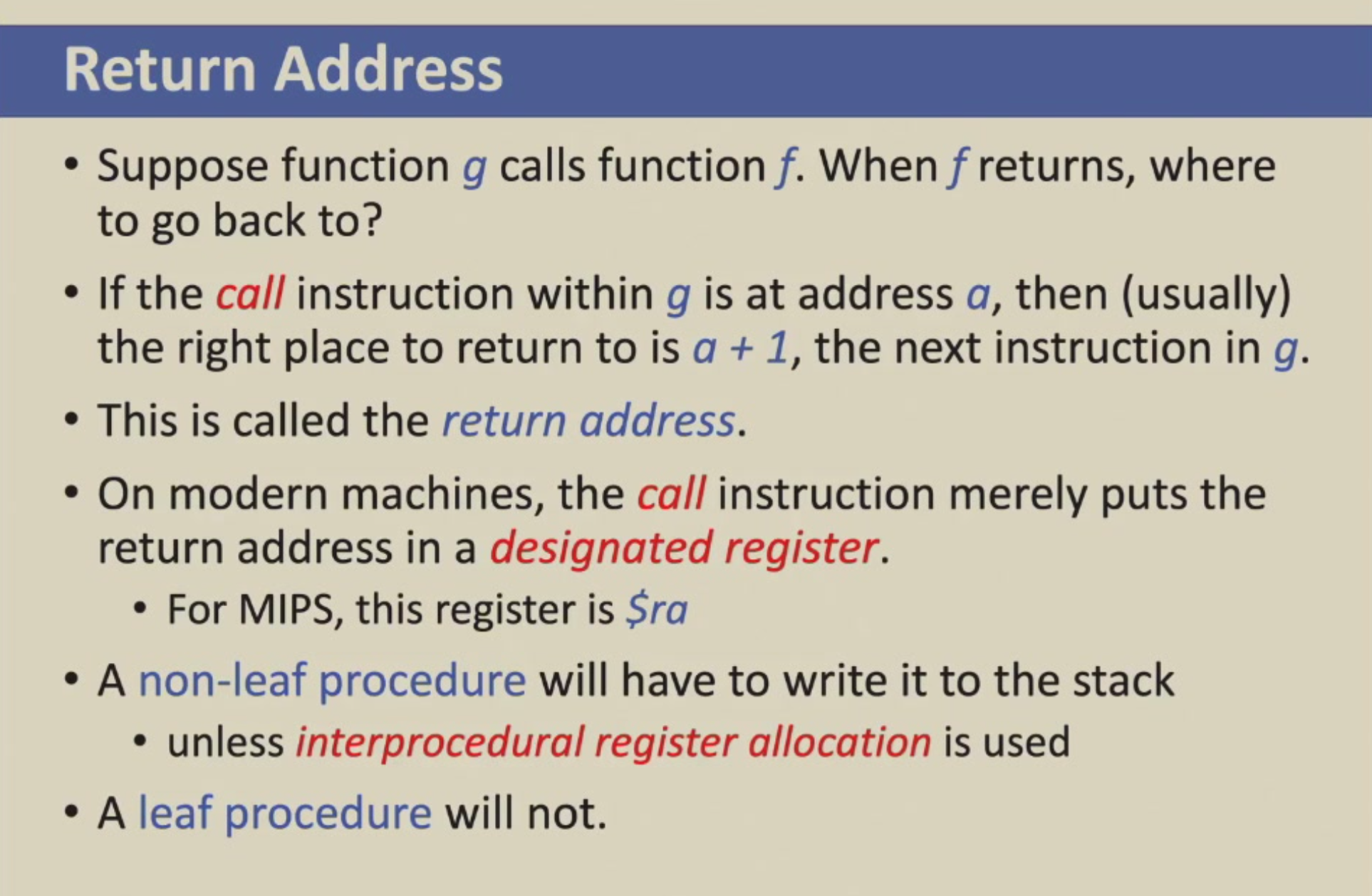
Return Address
也比较简单,没什么内容
Frame-Resident Variables
这里想表达的是,虽然现代的 procedure-call conventions 会:
- pass function parameters in registers
- pass the return address in a register
- return function result in a register
大部分的局部变量和中间结果也会被分配到寄存器中
但是也会存在一些情况需要我们将这些 values 保存在 memory 中,例如 Escape Variables:
A variable escapes if:
- it is passed by reference
- its address is taken (using C's & operator),
- or it is accessed from a nested function ( 主要和 static Link 有关 )
Escape Variables must be written to memory
Static Links
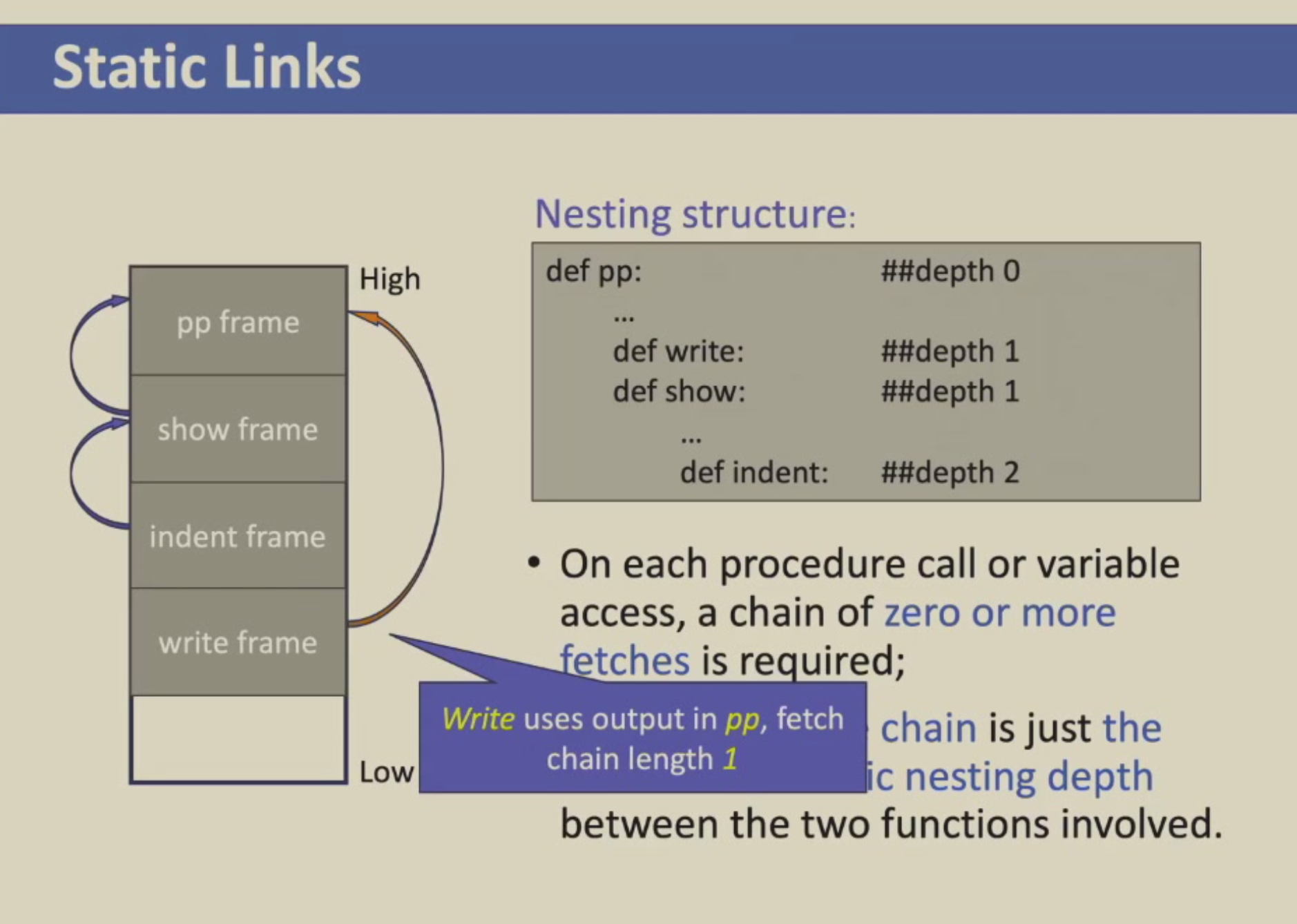
这是本章内容的考试重点,如果要考栈帧布局,最容易考的部分就是 static links 的内容
Note
Block Structure: In languages allowing nested function declarations (such as Pascal, ML and Tiger), the inner functions may use variables declared in outer functions.
我们通常使用 Static Link 的方式来解决 Block Structure 中嵌套的内层函数访问外部函数变量的问题
如下图,比较简单,主要需要知道的是 static link 指向的是声明顺序中的上一层函数栈帧