Benchmark and Evaluation
约 843 个字 4 张图片 预计阅读时间 8 分钟
Why benchmarks matter
Benchmarks 的作用是给模型能力提供一个可比较的标准。
常见 benchmark 例子包括:
- GLUE / SuperGLUE
- MMLU
- GPQA
- HLE
- Chatbot Arena
但 benchmark 的生命周期会变短,因为模型会不断针对已有测试集优化。
Good benchmarks
一个好的 benchmark 通常需要满足:
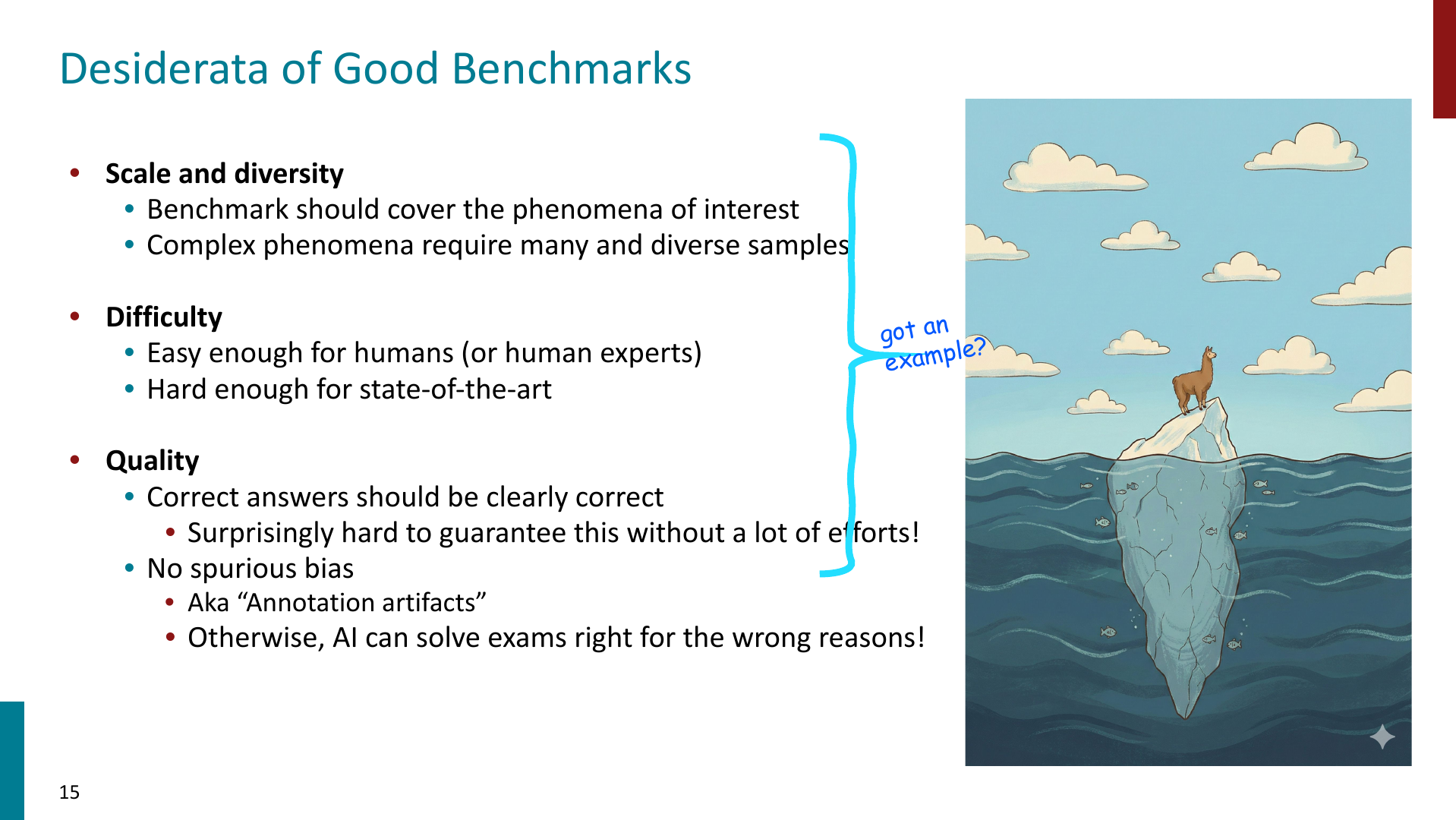
- Scale and diversity
- 覆盖足够多的任务类型和语言现象
- Difficulty
- 对人类或专家可解,但对当前 SOTA 仍有挑战
- Quality
- 题目和答案本身不能有明显错误
- No spurious bias
- 模型不能靠 shortcut / annotation artifact 得高分
Important
Benchmark 分数高不一定代表模型真正掌握了能力,也可能只是学会了数据集里的 shortcut。
Spurious bias and artifacts
很多 benchmark 会无意中包含 artifacts:
- answer 与 context 有高 lexical overlap
- 正确选项更常出现在某个固定位置
- unanswerable questions 有特殊措辞模式
- negation / entity swap 造成浅层线索
这会导致模型:
所以需要 adversarial examples、diagnostic sets、dynamic benchmarks 等方法检查模型是不是 right for the wrong reasons。
Classical metrics
生成任务常用 model-free metrics:
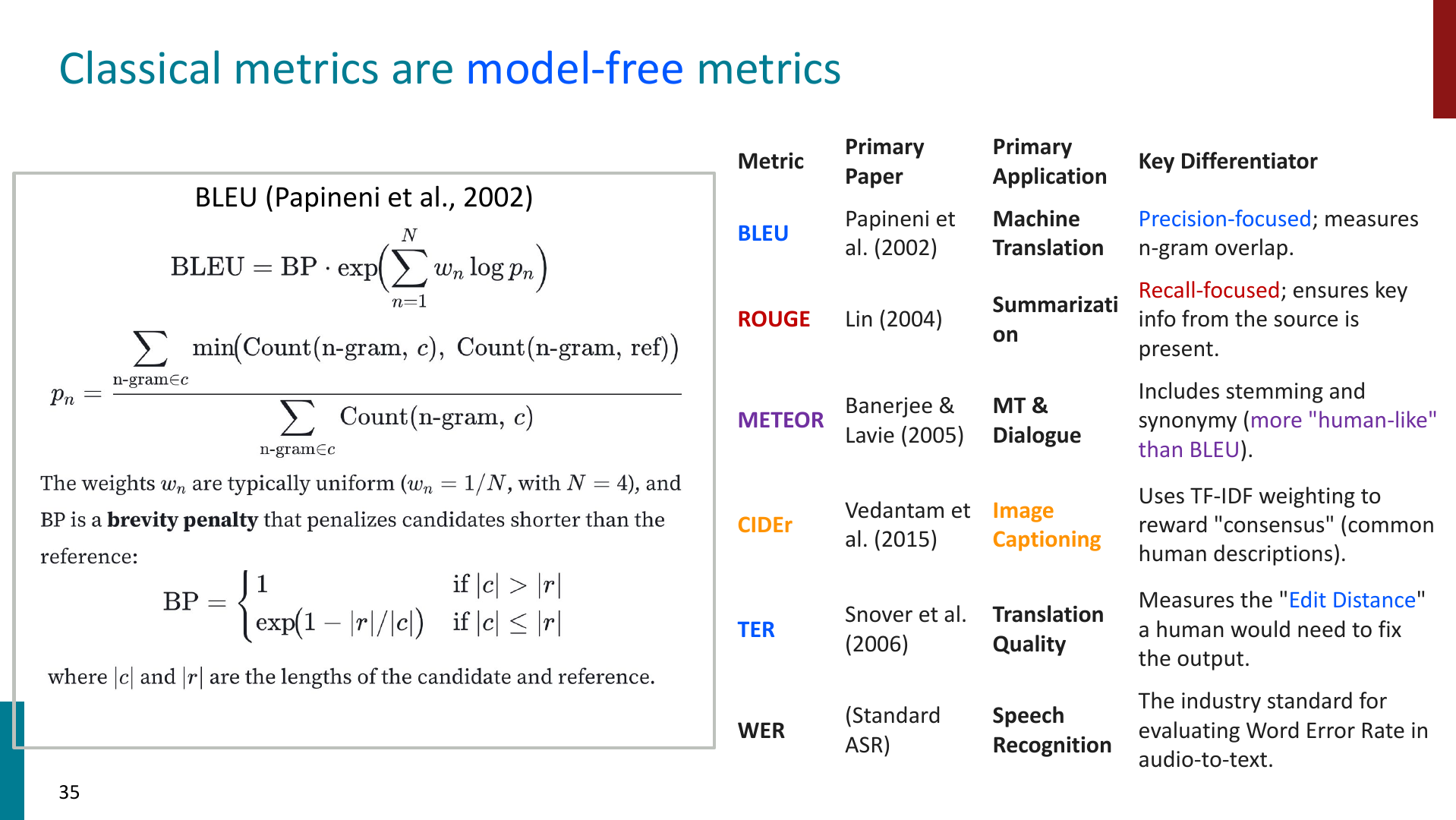
- BLEU
- precision-oriented n-gram overlap
- 常用于 machine translation
- ROUGE
- recall-oriented overlap
- 常用于 summarization
- METEOR / CIDEr / TER / WER
- 从不同角度衡量 overlap、edit distance 或错误率
这些指标的共同问题是:主要看 surface overlap,不一定理解语义。
例如:
- 同义改写可能被低估
- 流畅但事实错误的文本可能被高估
- reference 不完整时,正确答案也可能被判错
Model-based and reference-free evaluation
为了弥补 classical metrics 的限制,可以使用 model-based metrics:
- BERTScore
- 用 contextual embeddings 比较 candidate 和 reference
- BLEURT / COMET
- 用训练过的模型预测 human judgment
- FActScore / SelfCheckGPT / G-Eval
- 更关注 factuality、consistency 或 reference-free evaluation
但 model-based metrics 也有问题:
- 可能继承 evaluator model 的 bias
- 计算成本更高
- 不同 prompt / rubric 会影响结果
- 对 hallucination 和 subtle reasoning error 仍然可能不稳定
Human evaluation and LLM-as-judge
Human evaluation 长期被视为 gold standard,但成本高、速度慢,也会受主观偏好影响。
LLM-as-judge 更便宜、可扩展,但也有明显 bias:
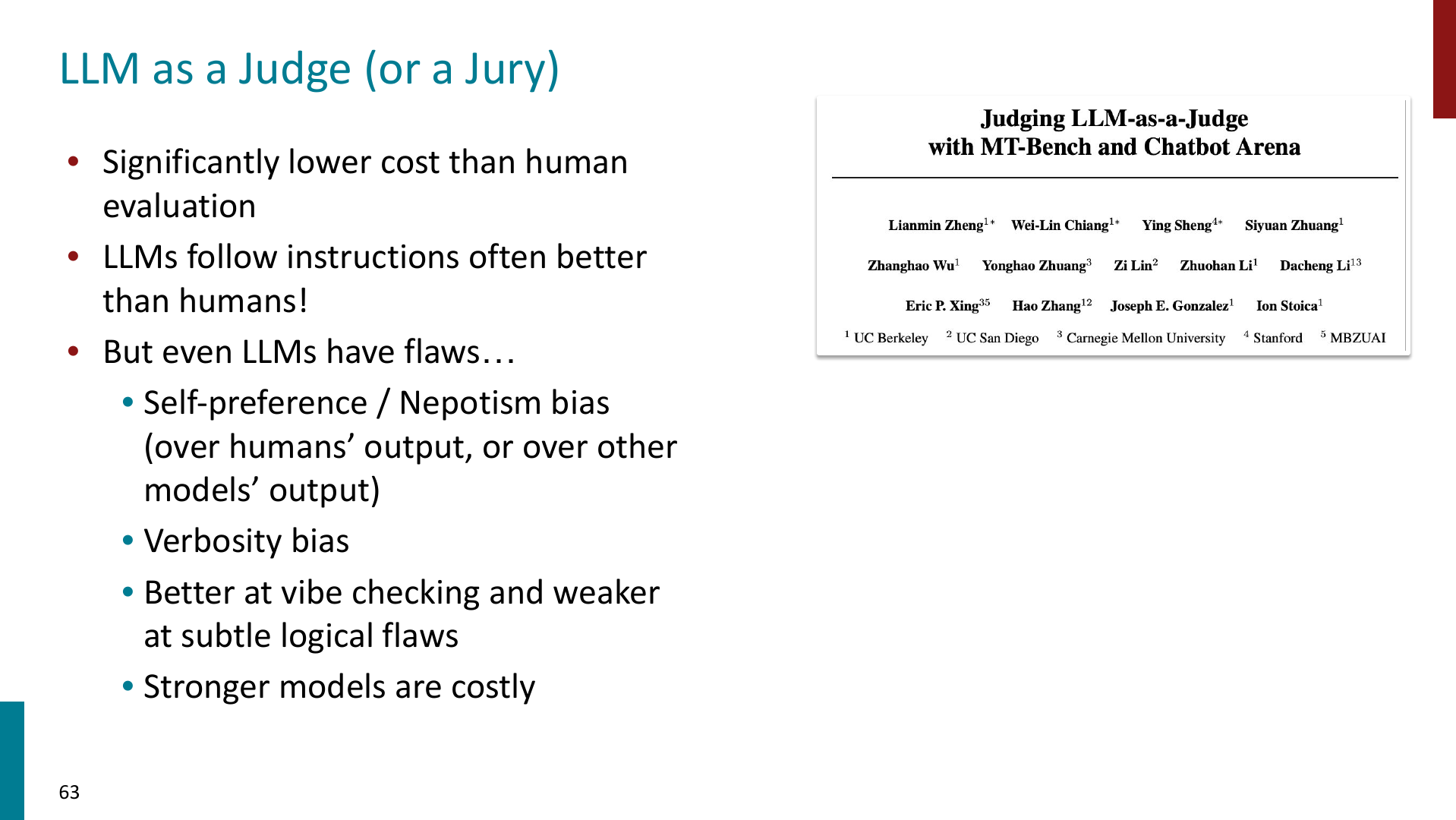
- 偏好更长、更详细的回答
- 偏好自己或同系列模型的输出
- 对细微逻辑错误可能不敏感
- rubric 不清楚时结果不稳定
更可靠的做法是:
- 给清晰 rubric
- 给 examples / calibration
- 使用 pairwise comparison
- 用多个 judge model 或 human spot check
Data contamination
数据污染是大模型评测中特别重要的问题:
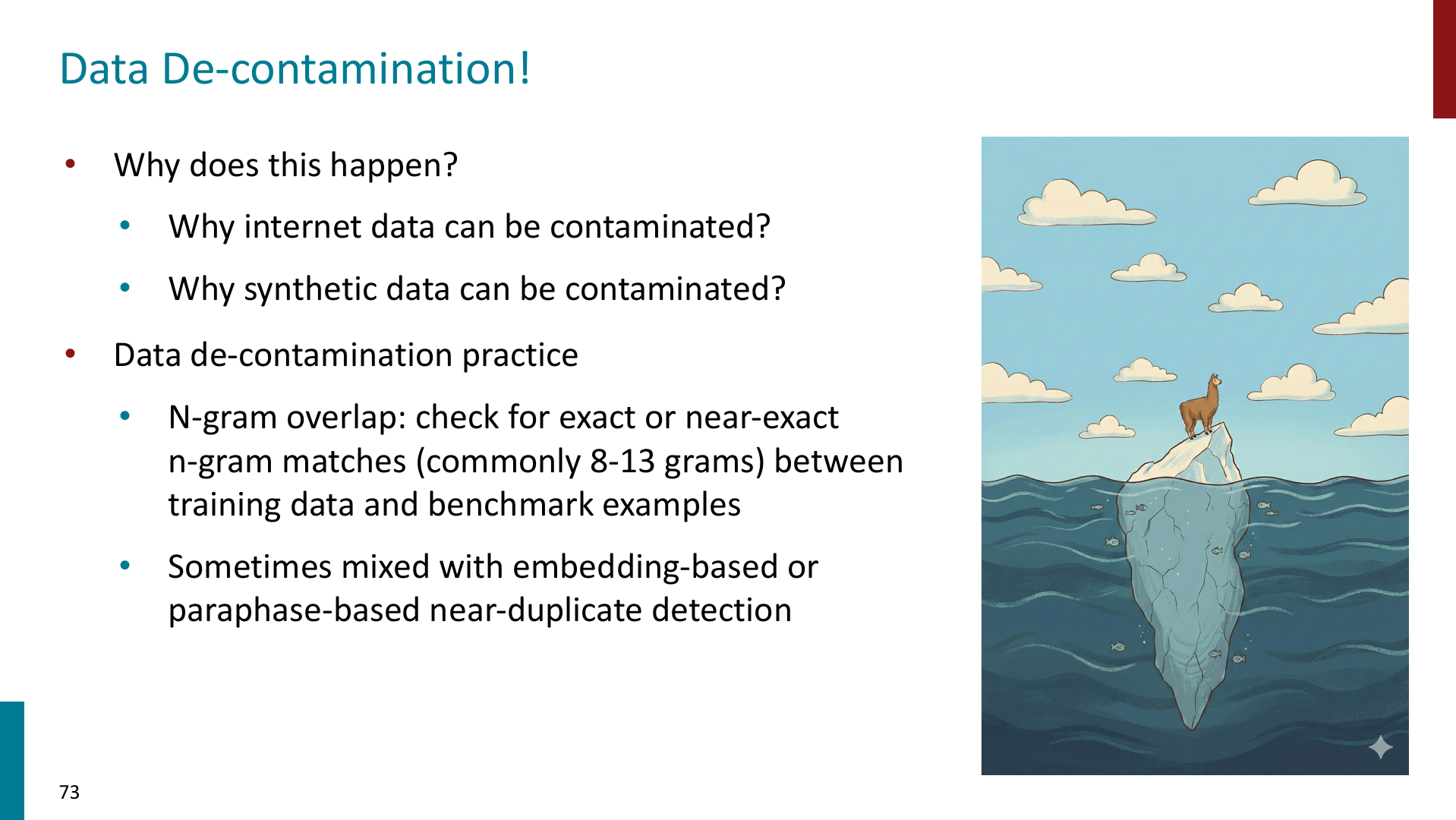
如果 benchmark 的 test examples 已经出现在 pretraining data 里,模型分数可能被高估。
常见 decontamination 方法:
- n-gram overlap detection
- near-duplicate search
- embedding similarity search
- paraphrase-level contamination check
Warning
对 closed-source models 来说,很难完全确认训练数据里是否包含某个 benchmark。
Goodhart's Law
课件中强调了 Goodhart's Law:
When a measure becomes a target, it ceases to be a good measure.
在 NLP evaluation 中的含义是:
- 一旦大家都针对某个 benchmark 优化
- benchmark 就可能逐渐失去区分真实能力的作用
- leaderboard progress 不一定等价于 real-world progress
Summary of Benchmark and Evaluation
- Benchmark 是模型比较的公共标准,但也会被过拟合和污染
- 好 benchmark 需要规模、多样性、难度、质量和低 artifact
- Classical metrics 简单稳定,但主要衡量 surface overlap
- Model-based metrics 更接近语义判断,但可能继承 evaluator bias
- Human evaluation 更可信但成本高,LLM-as-judge 更 scalable 但有偏见
- 数据污染、prompt sensitivity、Goodhart's Law 都会影响 evaluation validity