Pretraining
约 2748 个字 6 行代码 10 张图片 预计阅读时间 28 分钟
Pretraining 的核心思想是:先在大规模、通常不需要人工标注的文本上训练模型,让模型学到比较通用的语言知识;然后再把这个模型拿到具体任务上 finetune
也就是:
Important
Pretraining 能 scale 的关键在于:不要依赖昂贵的 labeled data,而是利用互联网上大量自然文本构造自监督任务。
常见的做法是:hide parts of the input, then train the model to reconstruct them.
Subword Modeling
之前我们把词表看成一个固定大小的 word vocabulary,如果测试时出现词表里没有的词,就只能映射成 UNK
这会带来几个问题:
- 拼写错误,例如
laern - 新词,例如
Transformerify - 罕见词
- 形态变化,例如同一个词根的不同变体
如果所有没见过的词都变成同一个 UNK,模型就完全丢失了这些词内部的结构信息
因此现代 NLP 通常使用 subword tokens:不一定把一个 word 当成最小单位,而是把 word 切成更小的 pieces
Byte-Pair Encoding
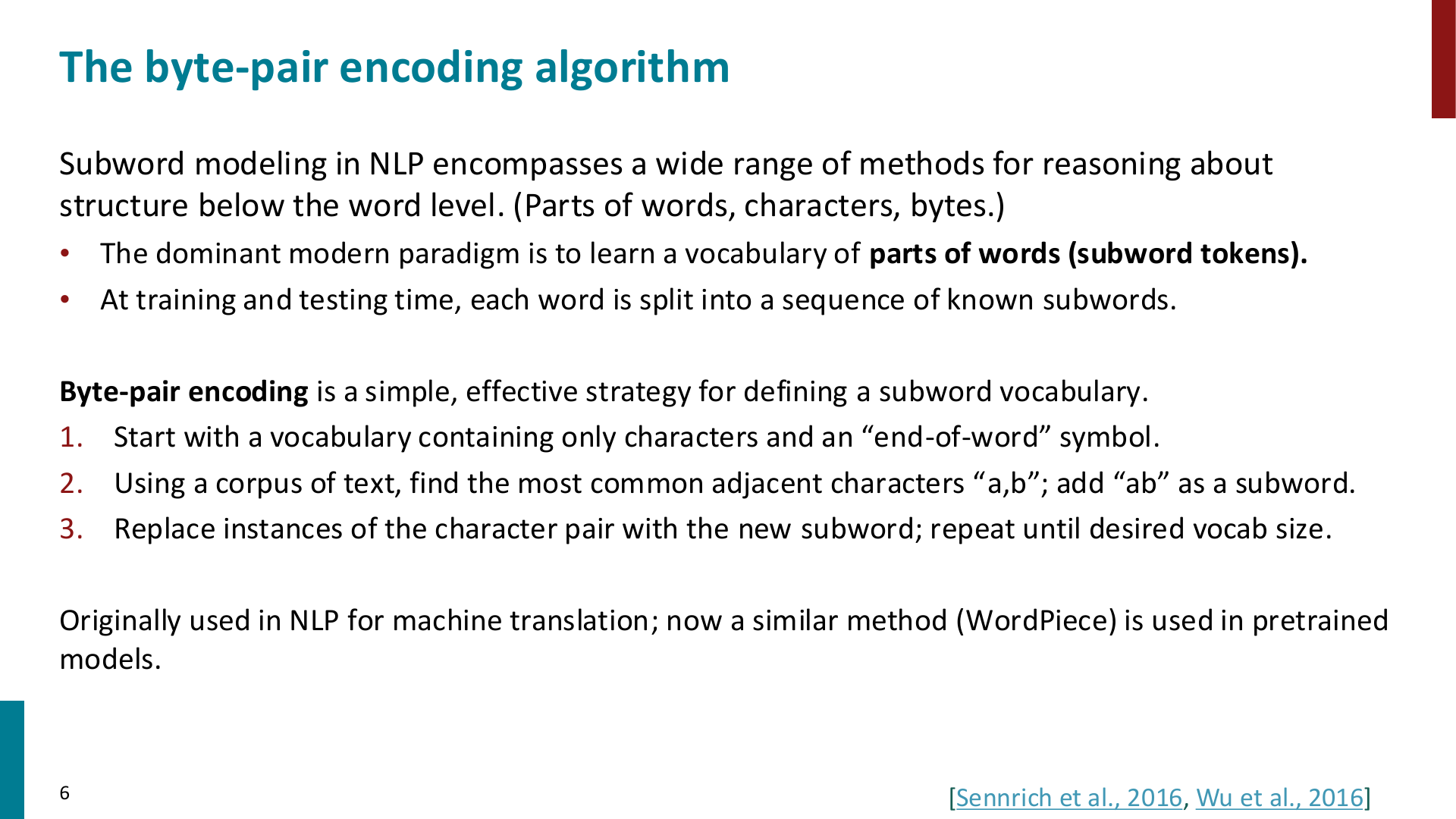
Byte-Pair Encoding (BPE) 是一种构造 subword vocabulary 的简单方法:
- 从 character-level vocabulary 开始,包含所有字符以及 end-of-word symbol
- 在 corpus 中找到最常见的相邻 token pair,例如
a,b - 把这个 pair 合并成新的 subword token
ab - 重复这个过程,直到达到想要的 vocab size
这样会形成一个介于 character 和 word 之间的 vocabulary
- 高频词可能直接成为一个完整 token,例如
hat - 低频词会被拆成多个 subword
- 最坏情况下,一个词可以被拆成字符序列,因此不容易出现完全无法表示的
UNK
Tip
Subword modeling 的好处是:模型既不用维护极其巨大的 word vocabulary,也不会像 character-level model 那样让序列变得特别长。
它是在 vocabulary size 和 sequence length 之间做折中。
From word embeddings to model pretraining
在最早的做法里,我们已经见过一种 pretraining:预训练 word embeddings
例如 word2vec / GloVe:
但是 pretrained word embeddings 有一个重要限制:同一个 word 在不同句子里仍然对应同一个 vector
比如:
I record the record.
这里两个 record 一个更像 verb,一个更像 noun,但静态 word embedding 会给它们相同的初始表示
Important
Word embedding pretraining 只预训练了 embedding matrix,大部分上下文建模参数仍然是随机初始化的。
Model pretraining 则是把整个 Transformer / LSTM 等模型都预训练,让模型在 pretraining 阶段就学习如何根据上下文表示 token 和句子。
现代 NLP 的 pretraining 更像:
这使模型学到的不只是 word-level semantics,还包括 syntax, coreference, sentiment, factual knowledge, topic 等更复杂的语言规律
Pretraining / Finetuning Paradigm
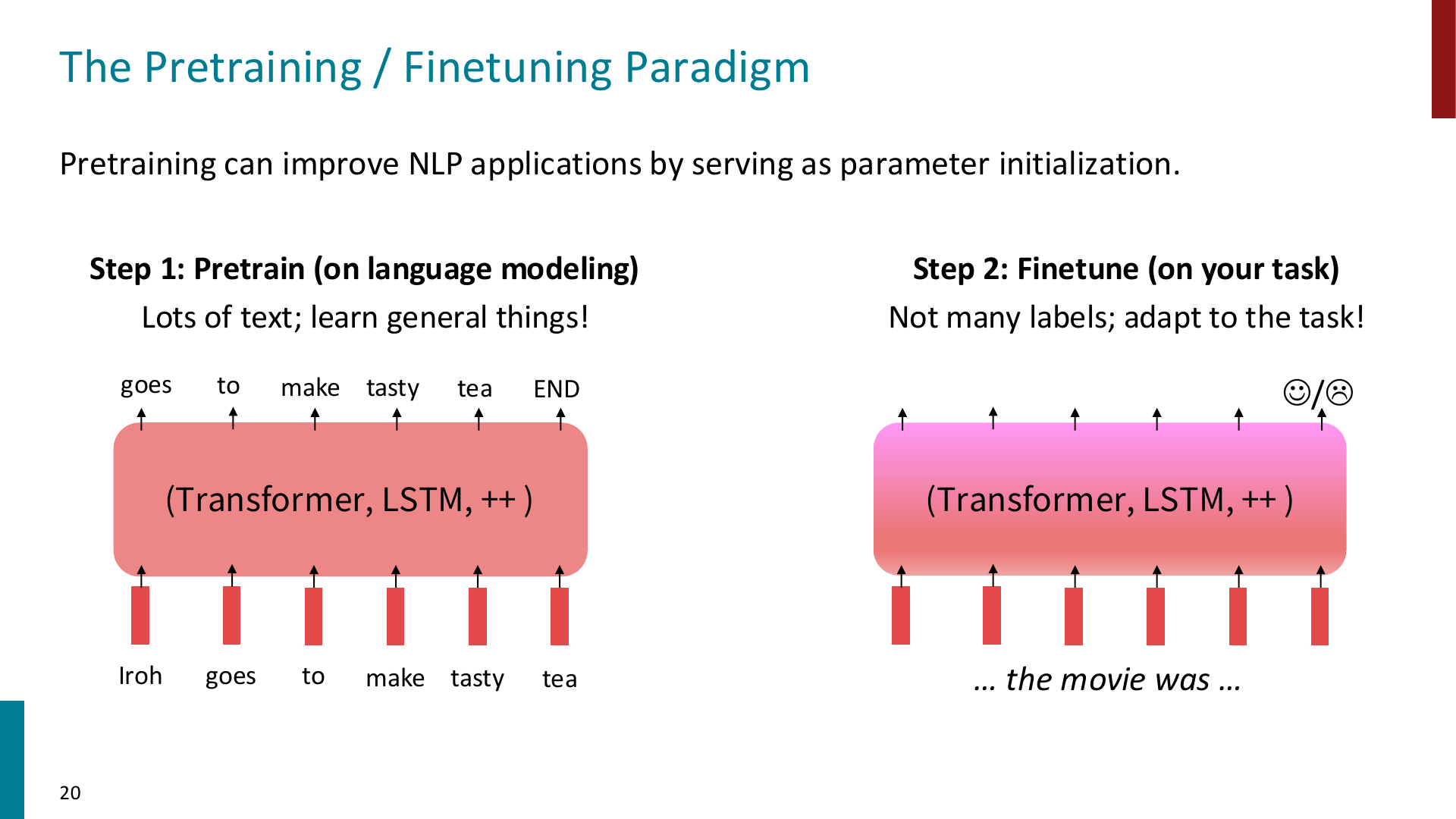
Pretraining / Finetuning 可以分成两步:
- Pretrain
- 使用大量 unlabeled text
- 学习通用语言结构和参数初始化
- 训练任务通常是 language modeling 或 reconstruct corrupted input
- Finetune
- 使用具体 downstream task 的 labeled data
- 数据量通常小很多
- 在预训练参数基础上继续训练,让模型适应具体任务
以 language modeling pretraining 为例,模型学习:
训练目标是最大化真实文本的概率,等价于最小化 negative log-likelihood:
pretrain 完后,保存模型参数,然后在下游任务上继续训练
Tip
可以把 pretraining 看成一种强大的 parameter initialization。
随机初始化的模型从零开始学语言;pretrained model 已经通过大量文本学过语言,再用少量 labeled data 去适配任务。
Model pretraining three ways
不同 Transformer 架构适合不同的预训练方式:
- Encoder
- 可以看到 bidirectional context
- 适合做 classification, tagging, retrieval, NLU 等理解类任务
- 代表模型:BERT
- Encoder-Decoder
- encoder 负责理解输入,decoder 负责生成输出
- 适合 seq2seq 任务
- 代表模型:T5
- Decoder
- 使用 causal mask,只能看 left context
- 最自然的目标就是 language modeling
- 适合 autoregressive generation
- 代表模型:GPT
Pretraining Encoders
Encoder 的 self-attention 是 bidirectional 的,每个位置都能看到左右两边的 token
这就导致它不能直接做普通 language modeling:
因为 encoder 在表示 \(w_t\) 的时候已经看到了未来 token,如果还让它预测下一个词,就会发生信息泄漏
因此 BERT 使用 Masked Language Modeling (MLM):
随机 mask 掉输入中的一部分 token,让 encoder 根据双向上下文预测被 mask 的 token
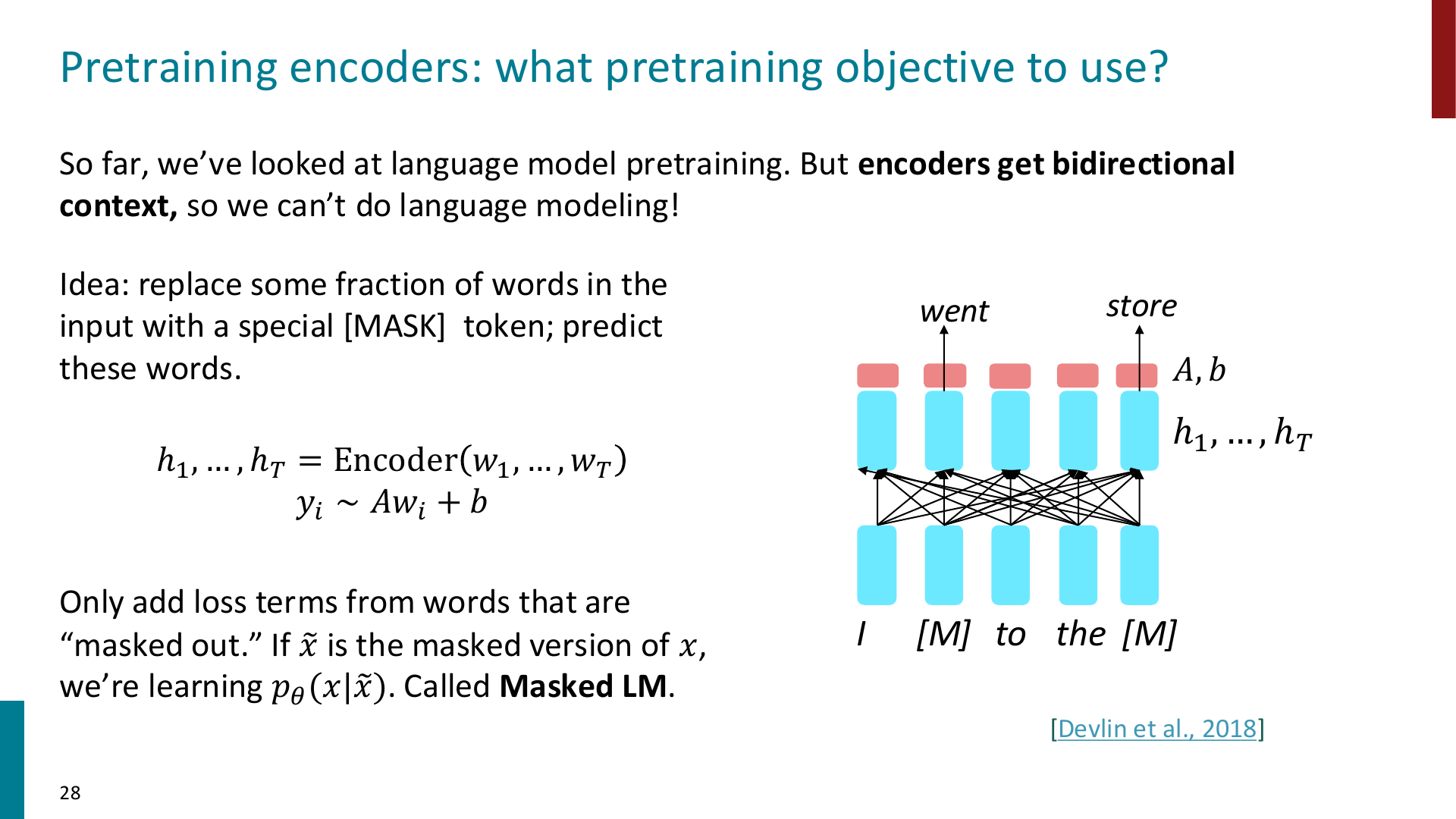
设原始输入是:
mask 后的输入是:
encoder 输出 hidden states:
对于被 mask 的位置 \(i\),用 hidden state 预测原 token:
loss 只在被 mask 的位置上计算:
其中 \(M\) 是被 mask 的位置集合
Important
MLM 的关键是:encoder 可以利用左右两边的 context,因此它学到的是 bidirectional contextual representation。
这也是 BERT 适合理解类任务的原因。
BERT
BERT 全称为 Bidirectional Encoder Representations from Transformers
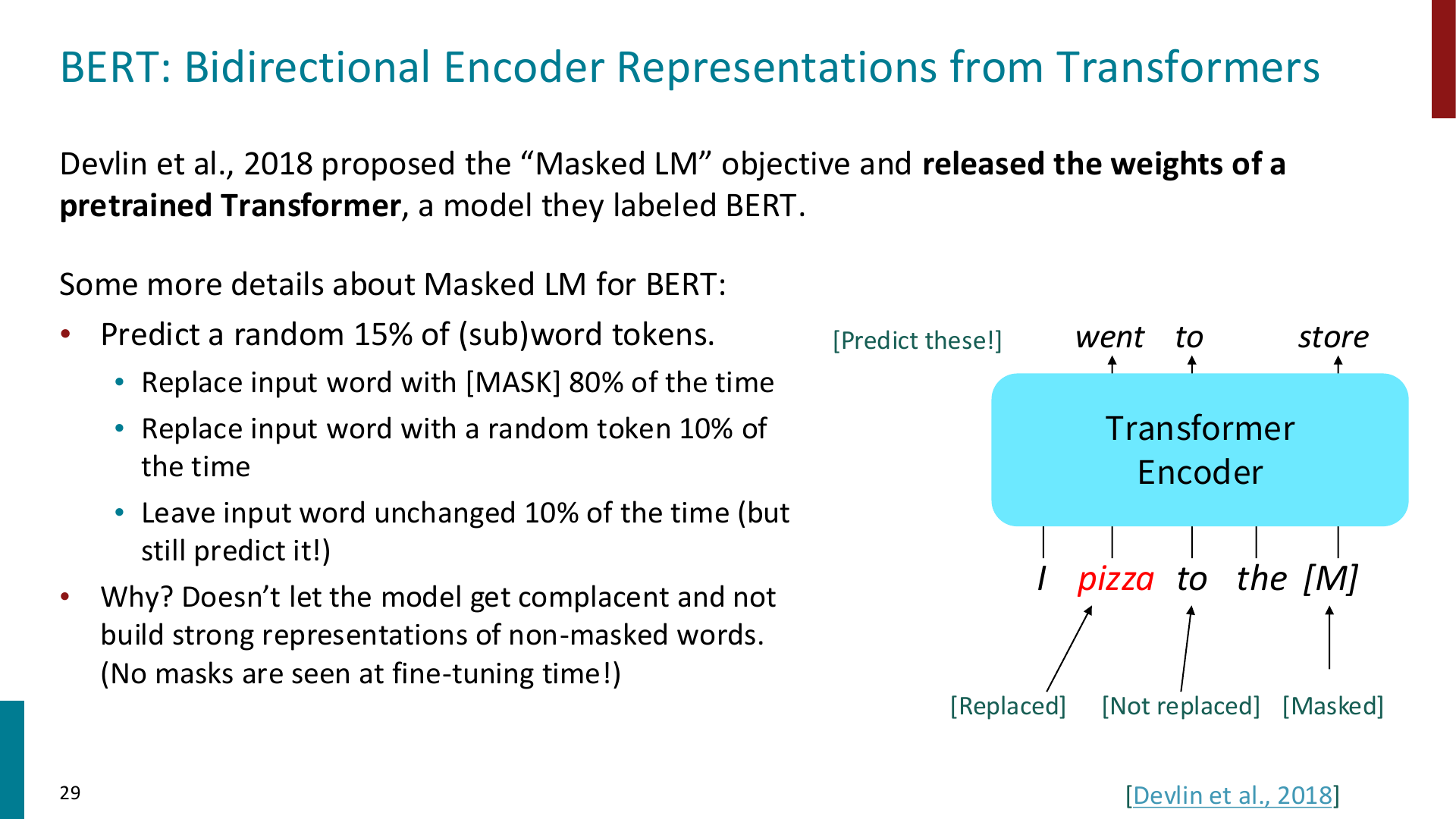
BERT 的 MLM 细节:
- 随机选择 15% 的 subword tokens 来预测
- 对被选中的 token:
- 80% 替换成
[MASK] - 10% 替换成 random token
- 10% 保持原 token 不变,但仍然要求模型预测它
- 80% 替换成
为什么不总是替换成 [MASK]?
因为 finetuning 和 test time 通常不会出现 [MASK],如果模型只在 [MASK] 位置上学习表示,pretraining 和 finetuning 之间会产生 mismatch
Tip
BERT 让一部分被预测 token 保持不变,目的是逼模型对所有位置都构建强 representation,而不是只对显式 [MASK] 的位置认真建模。
BERT 还使用过 Next Sentence Prediction (NSP):
- 输入两个连续文本片段
- 判断第二个片段是否真的跟在第一个片段后面
不过后来的工作认为 NSP 不一定必要,例如 RoBERTa 主要通过训练更久、使用更多数据、去掉 NSP 来改进 BERT
BERT 的常见规模:
- BERT-base: 12 layers, 768 hidden size, 12 attention heads, 110M parameters
- BERT-large: 24 layers, 1024 hidden size, 16 attention heads, 340M parameters
Important
BERT 这类 encoder-only model 不适合直接做自然的 autoregressive generation。
因为它的预训练目标不是从左到右生成词,而是根据双向上下文填空。
Extensions of BERT
课件中提到两个常见扩展:
- RoBERTa
- 更长时间训练
- 更多数据
- 去掉 Next Sentence Prediction
- SpanBERT
- 不只是 mask 单个 token,而是 mask 连续 span
- 任务更难,也更接近很多需要短语级理解的任务
Tip
从 RoBERTa 可以看到一个重要结论:不改变 Transformer encoder 结构,只增加数据和计算,也可能显著提升 pretraining 效果。
Pretraining Encoder-Decoders
Encoder-decoder 架构同时有:
- encoder 的 bidirectional understanding
- decoder 的 autoregressive generation
因此它很自然地适合 seq2seq task,例如 translation, summarization, question answering
一种简单想法是:把输入前缀给 encoder,然后让 decoder 继续做 language modeling
但 T5 发现更有效的方式是 span corruption
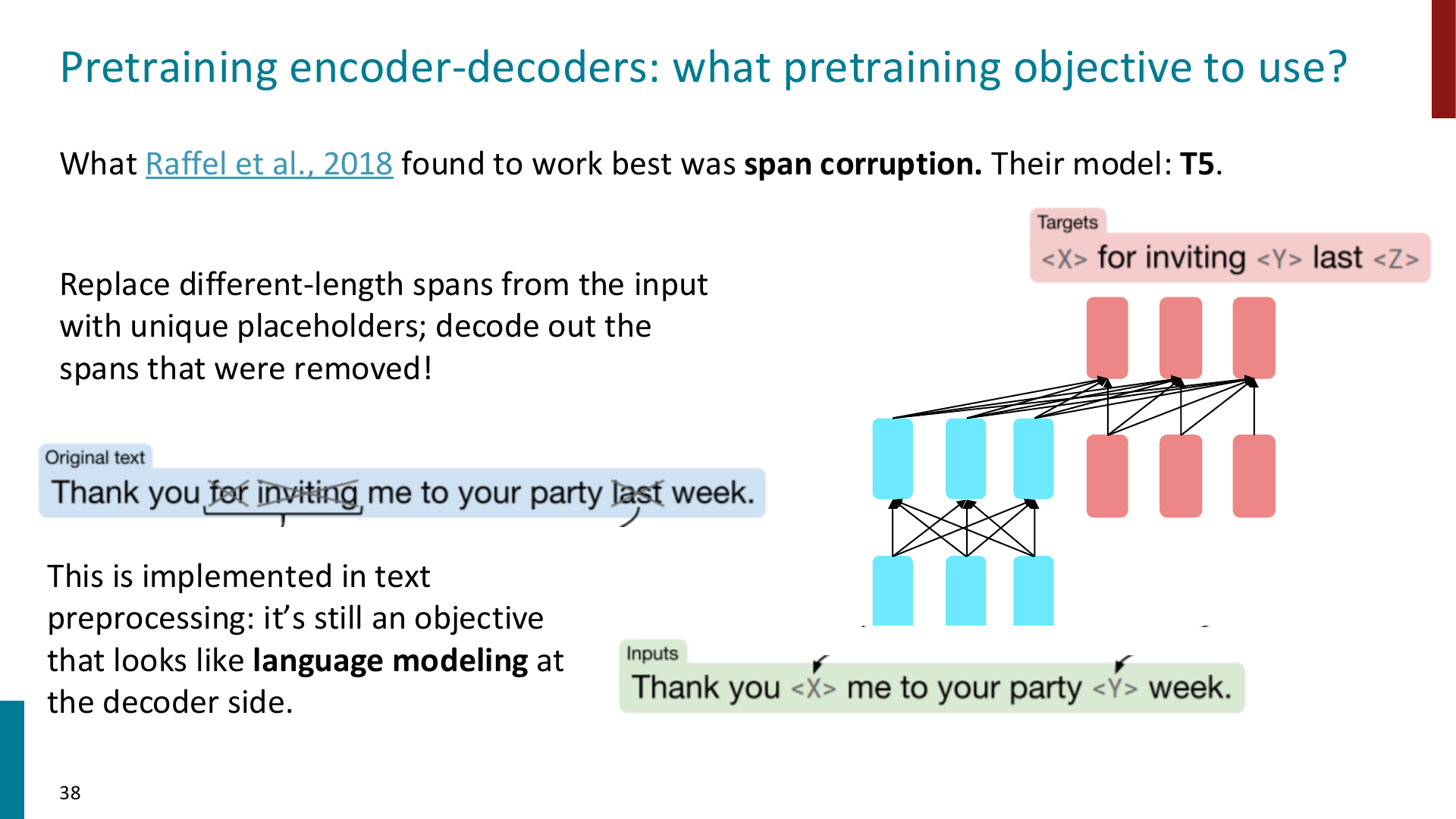
Span corruption 的做法:
- 从原始文本中删除若干连续 span
- 用特殊 placeholder 替换每个被删掉的 span,例如
<X>,<Y> - decoder 的目标是按顺序生成被删除的 spans
例如:
corrupted input:
target:
Important
T5 的 span corruption 本质上是一个 denoising objective:
给模型一个被破坏的输入,让它恢复缺失内容。
decoder 端仍然是 autoregressive generation,所以训练形式依然像 language modeling。
T5 还有一个重要思想:把各种 NLP task 都表示成 text-to-text
例如:
这样 classification, translation, summarization, QA 都可以统一成“输入一段文本,输出一段文本”
Pretraining Decoders
Decoder-only Transformer 使用 causal mask,只能 attend to past tokens
因此它最自然的 pretraining objective 就是 language modeling:
也就是:
Finetune decoder for classification
如果下游任务是分类任务,可以把整段输入喂给 pretrained decoder,然后取最后一个 token 的 hidden state 做分类
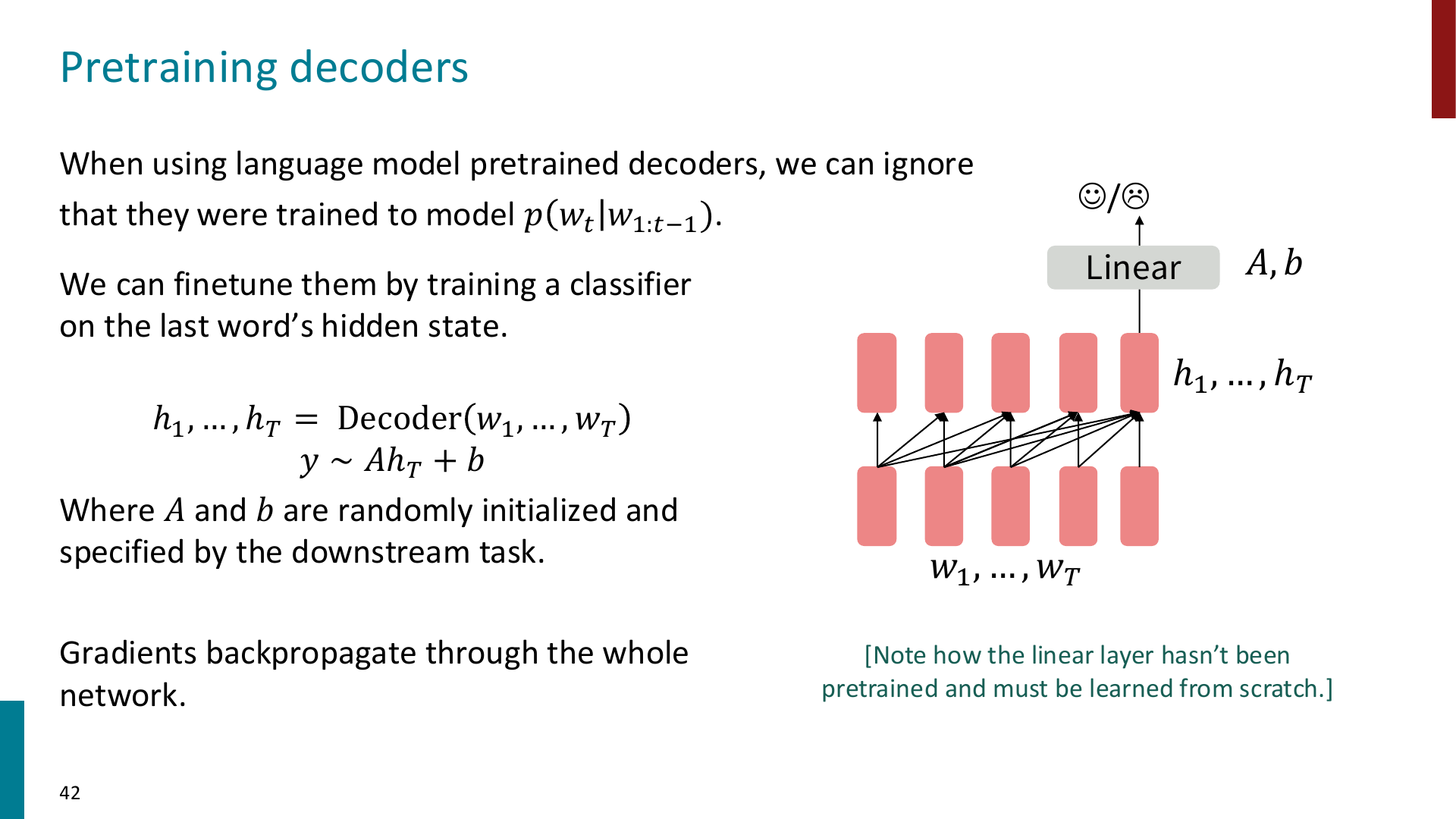
形式上:
其中 \(A,b\) 是下游任务新增的 classifier 参数,通常是随机初始化的
Tip
这里 pretrained decoder 提供语言表示能力,而最后的 linear classifier 需要从下游 labeled data 中学习。
Finetune decoder for generation
如果下游任务本身就是生成序列,例如 dialogue 或 summarization,那么 decoder-only model 可以更自然地继续使用 language modeling head
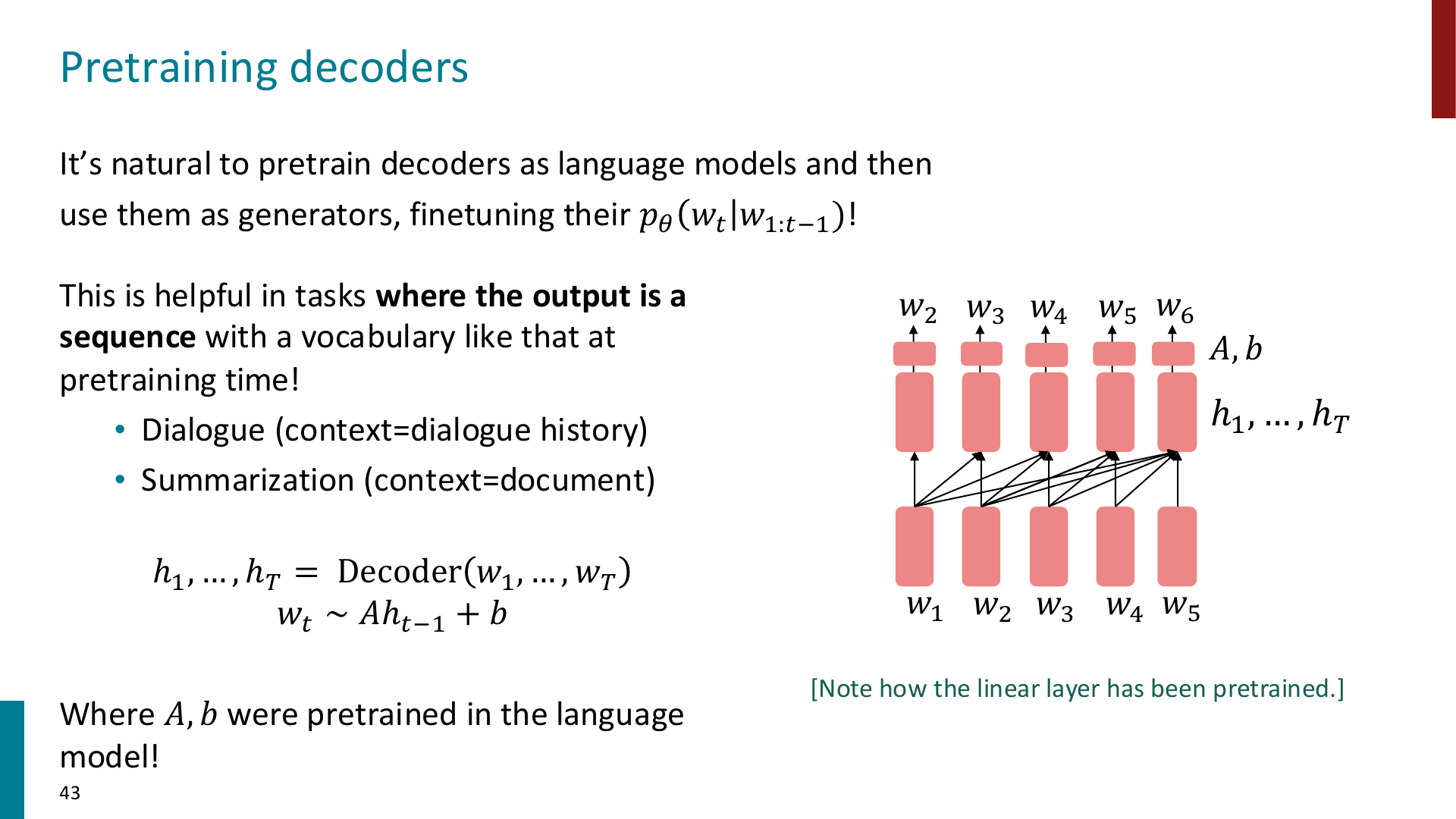
例如 summarization 可以写成:
模型继续预测:
这时 \(A,b\) 也来自 language modeling pretraining,因此输出层本身也已经被预训练过
Important
对于生成任务,pretrained decoder 的优势很直接:pretraining 和 finetuning 都在做 next-token prediction,只是条件文本和目标文本变了。
GPT
GPT 是 decoder-only pretraining 的代表
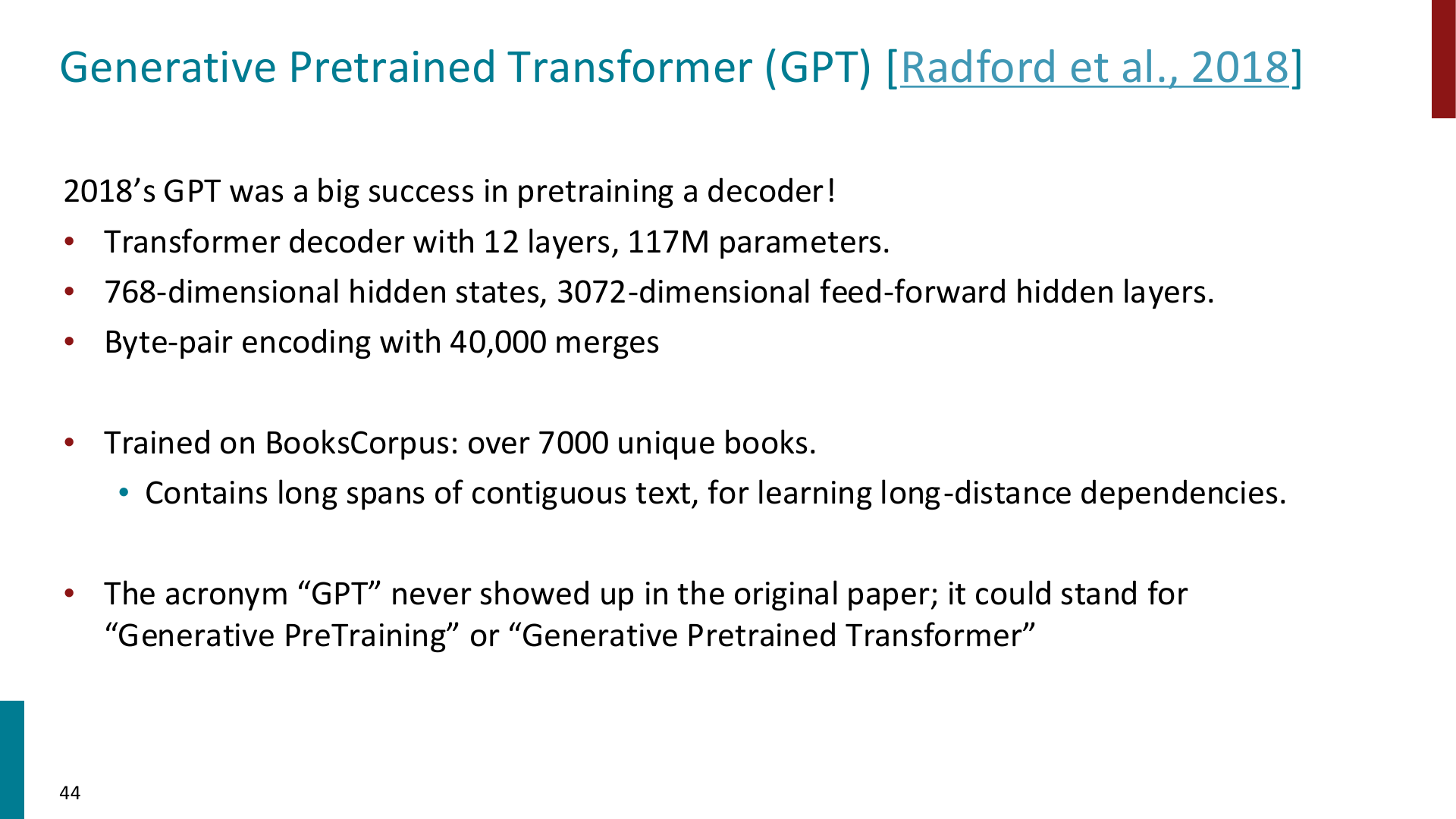
课件中 GPT-1 的设置:
- Transformer decoder
- 12 layers
- 117M parameters
- hidden size 768
- FFN hidden size 3072
- BPE with 40,000 merges
- 使用 BooksCorpus 训练
对于一些分类任务,GPT 会把输入格式化成一个 token sequence,然后在特殊 token 的表示上做分类
例如 natural language inference:
然后把 classifier 接在[EXTRACT] token 的 hidden state 上
In-context Learning
当 decoder language model 变得非常大时,它不一定需要 gradient update 才能适配一个任务
如果我们在 prompt 里给出几个输入输出示例,模型可能会根据这些 examples 推断接下来要做什么,这叫 in-context learning
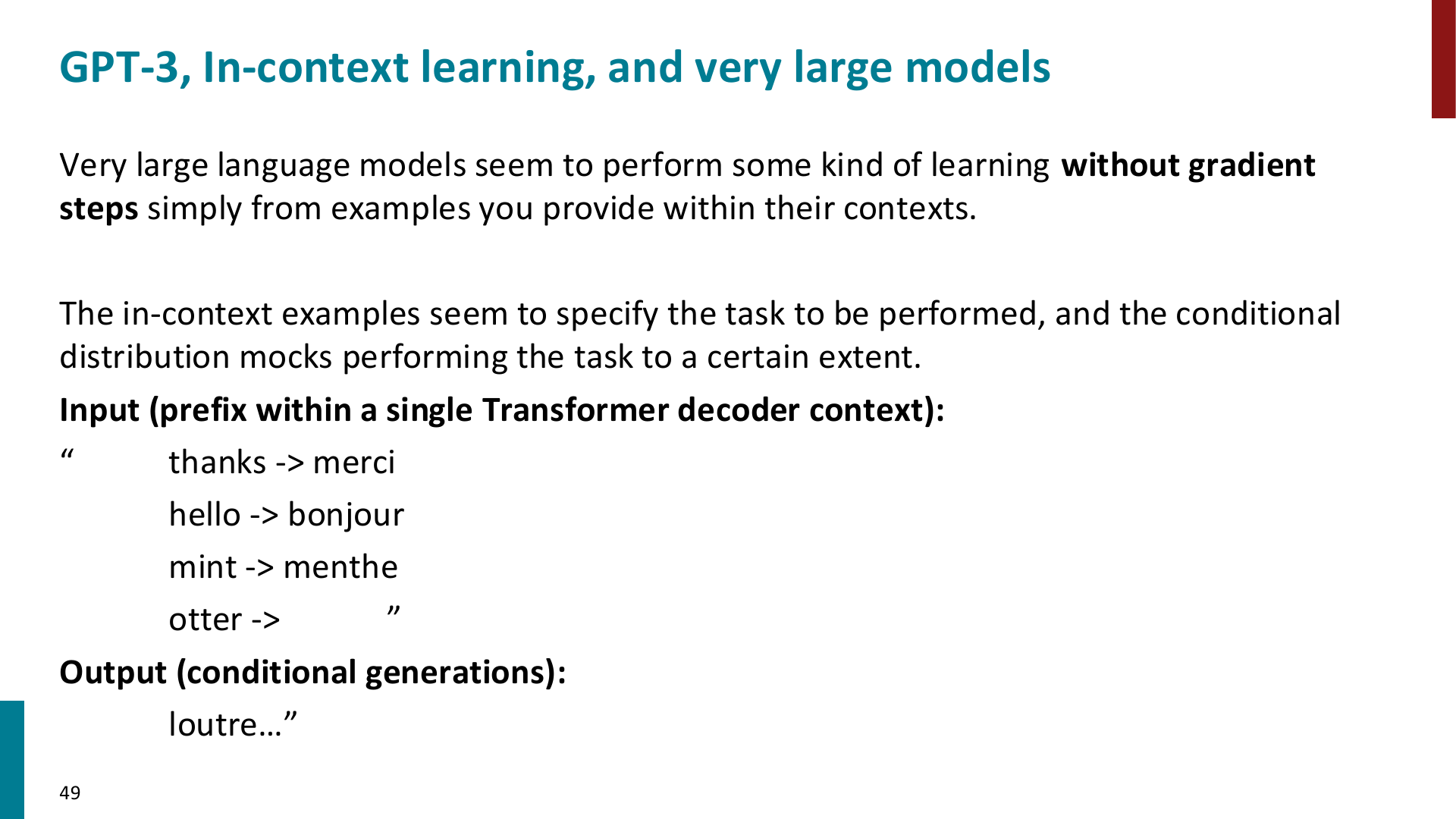
例如 prompt 中给出:
模型可能继续生成:
Important
In-context learning 没有更新模型参数。
它只是把 examples 放进当前 context,让 decoder 根据 prefix 的条件分布继续生成。
这和 finetuning 的区别是:
- finetuning: 用 labeled data 更新参数
- in-context learning: 不更新参数,只改变输入 prompt
Scaling Laws
课件中还强调了 scaling 的重要性:随着 model size, dataset size, compute 增大,language model 的 perplexity / loss 通常会稳定下降
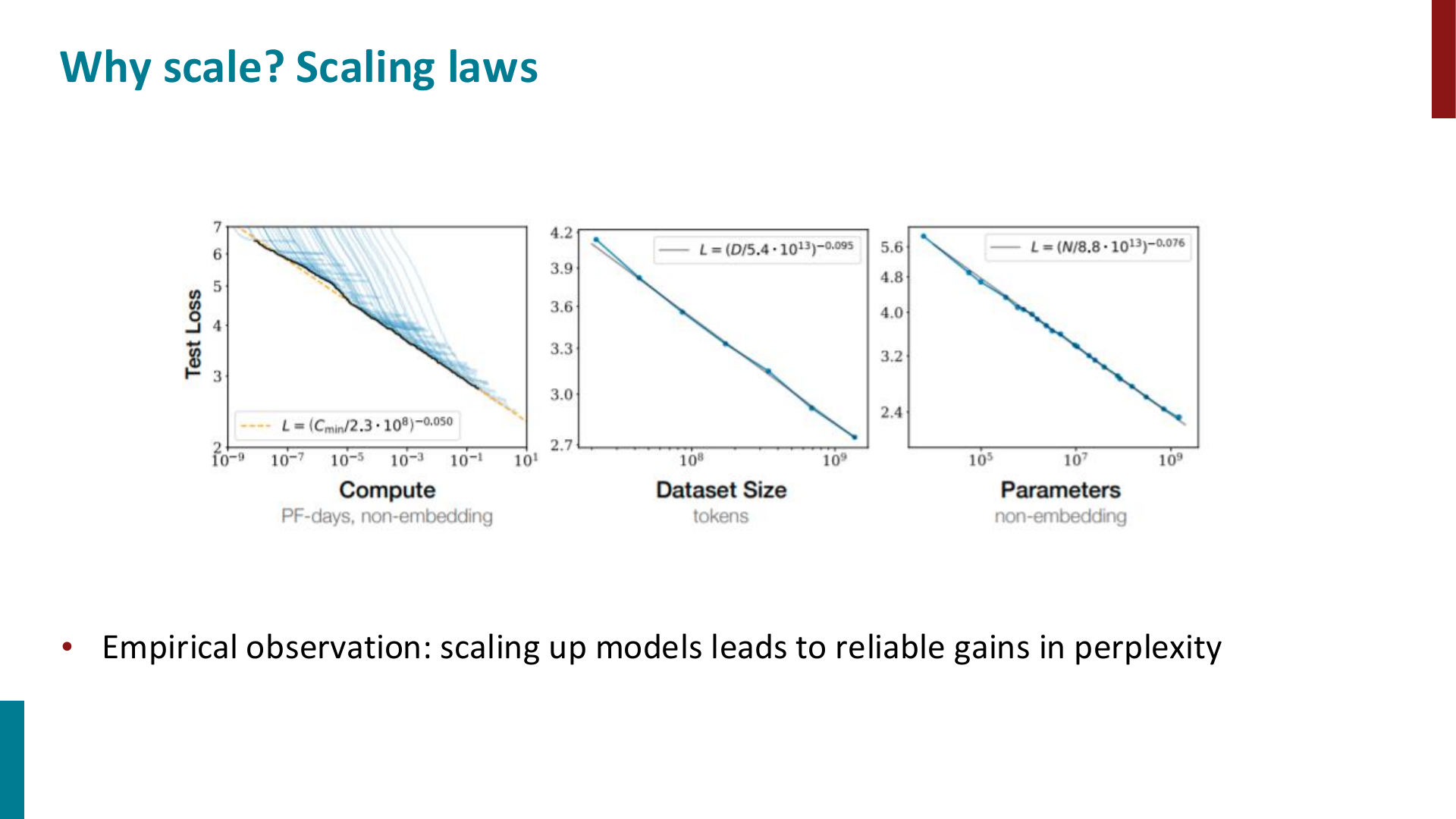
粗略来说,大 Transformer 的训练成本和下面两个因素强相关:
所以不是参数越大越好,还要考虑 data 和 compute 的分配
Tip
Compute-aware scaling 的核心问题是:
给定固定训练预算,应该把 compute 用在更大的 model 上,还是更多的 training tokens 上?
如果模型太大但数据不够,可能并不是最优;更小但训练 token 更多的模型有时反而效果更好。
What does pretraining teach?
Pretraining 的任务看起来只是“预测缺失 token”或“预测下一个 token”,但为了做好这些任务,模型会被迫学习很多语言和世界知识
例如:
Stanford University is located in ___, California.- factual knowledge
I put ___ fork down on the table.- syntax
The woman walked across the street, checking for traffic over ___ shoulder.- coreference
I went to the ocean to see the fish, turtles, seals, and ___.- lexical semantics / topic
The movie was ___.- sentiment
Important
Pretraining 并不是显式告诉模型 grammar, sentiment, coreference rules。
这些能力是模型为了降低 language modeling / reconstruction loss,从大规模文本统计中间接学出来的。
但 pretraining 也会带来问题:
- 模型可能记住训练数据中的内容
- 训练数据可能包含 copyrighted material 或 private information
- 模型会学习并放大数据中的 bias,例如 racism, sexism 等
因此 pretraining 的效果很强,但它不是免费且无风险的:数据来源、隐私、版权、公平性都需要被认真考虑
Summary of Pretraining
可以把这一章的主线总结成:
- Subword modeling 解决固定 word vocabulary 和
UNK的问题 - Pretraining 从静态 word embeddings 发展到 whole-model pretraining
- Pretraining / finetuning paradigm 用大量无标注数据学习通用能力,再用少量标注数据适配任务
- Encoder-only model 使用 MLM,代表是 BERT
- Encoder-decoder model 常用 denoising / span corruption,代表是 T5
- Decoder-only model 使用 language modeling,代表是 GPT
- 大模型可以通过 prompt 做 in-context learning
- Scaling laws 说明 model size, data size, compute 对效果有可预测影响
- Pretraining 会学习很多有用语言规律,也会继承和放大训练数据中的风险